

Cheers! This month, The No Kill Advocacy Center turns 22. And we are asking our supporters to join us in celebration by sending just $22.
In many ways, we are still a young organization. But we have accomplished a lot. When we started, mass killing in shelters was the norm. Only one community saved healthy and treatable dogs, cats, community cats, rabbits, hamsters, gerbils, and other shelter animals. It didn’t matter if they were young, old, blind, or missing limbs. It didn’t matter if they were healthy, sick, injured, or traumatized. They were all guaranteed a home, and they all found one. Our director created the No Kill community, and we have successfully replicated its success in communities across the country.* But we face increasing pushback.
Despite tremendous gains over the last 22 years in bringing transparency, accountability, and improvements to the pound industry — including a 95% decline in killing thanks to our No Kill Equation model of sheltering — the last few years have seen those gains slowly but increasingly eroded. With communities across the country in need of reform, we need your support more than ever.
Please consider a birthday gift in any amount.
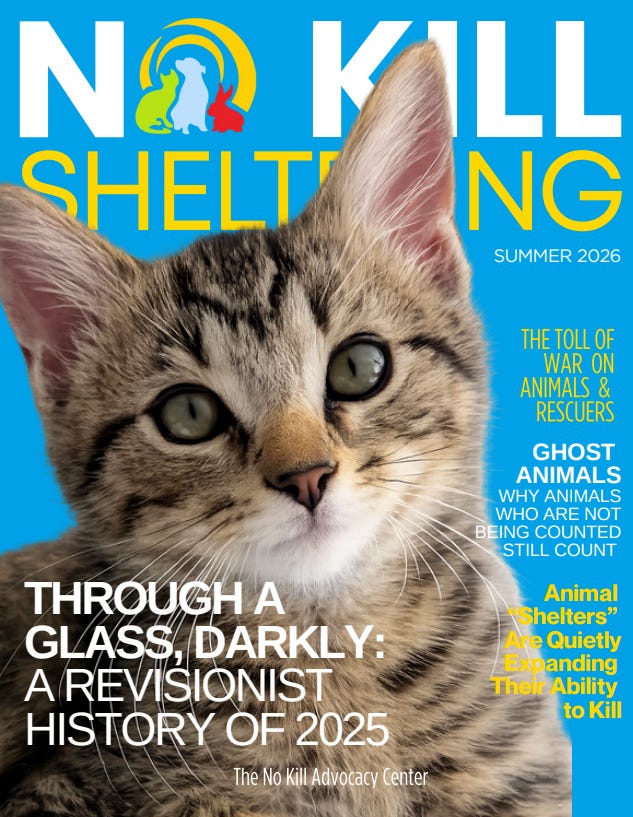
Or subscribe to No Kill Sheltering, our magazine for saving lives. All back issues are also available for download.
Together, not only will we save lives; we will create a future where every animal will be respected and cherished and where every individual life will be protected and revered.
*When we call for a No Kill nation, we are specifically referring to the promise and success of open-admission No Kill Equation sheltering. We are referring to a shelter in the dictionary sense of the word: “an establishment providing food, protection from danger, and temporary housing for stray or unwanted animals.” The door is always open and animals find a new beginning, instead of the end of the line.
We are NOT referring to the fundraising scam where “managed intake,” “community sheltering,” and “Human Animal Support Services” are euphemisms for “no entry” and increases in placement rates are dependent on animals being turned away, abandoned, and left to suffer.
If the goal of a No Kill nation is to truly mean something, we must stay rooted in reality: a placement rate cannot be considered ethical if it comes at the cost of abandoning the very animals shelter staff are responsible for protecting. These animals do not cease to exist simply because municipal shelters fail to count them. They are still suffering, still dying, and their lives still matter.