

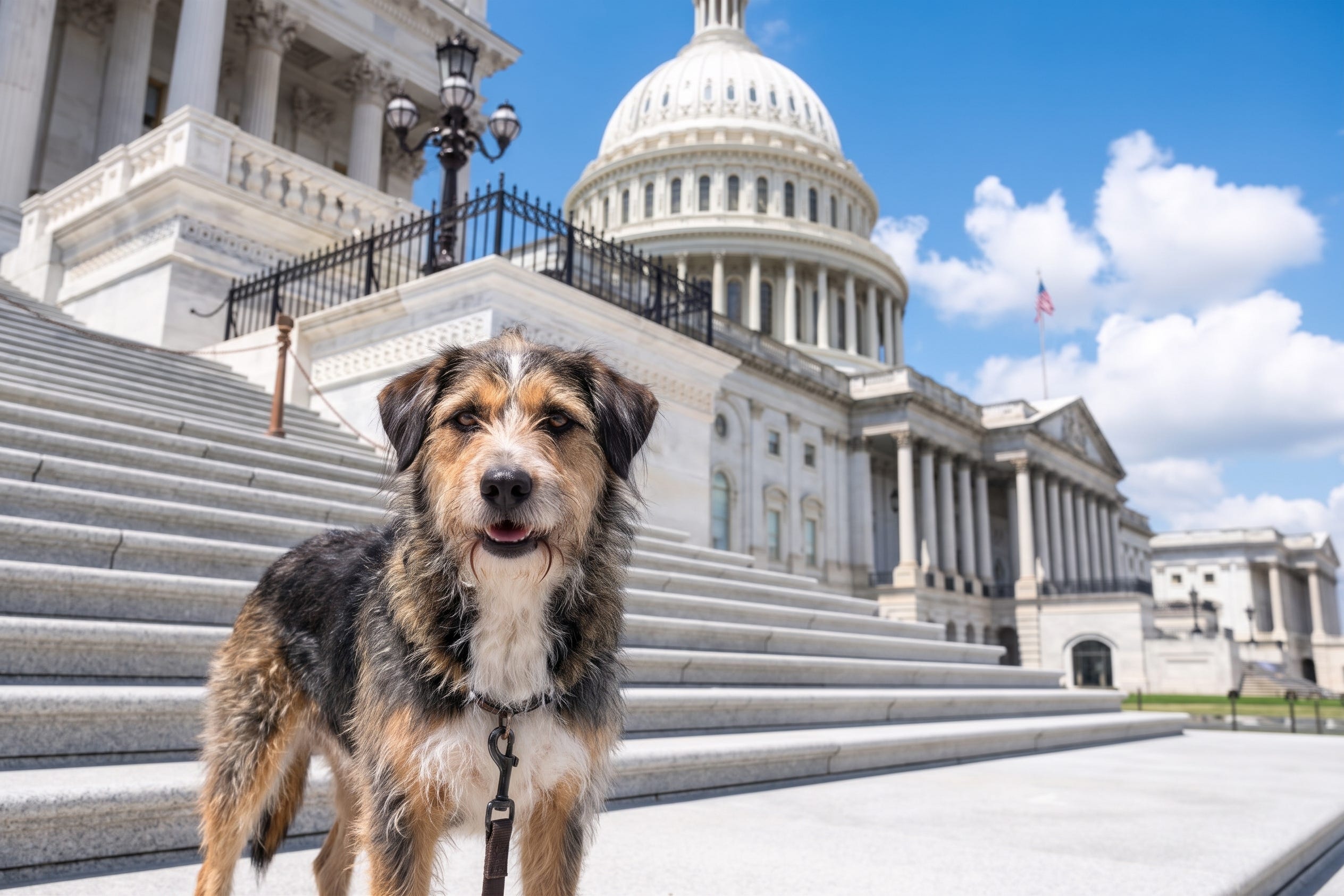
A California Congressman has introduced federal legislation intended to strengthen legal protections for pets and hold negligent animal-care facilities — like groomers, boarding kennels, shelters, and rescue groups — accountable.
Under current law, pets are generally classified as property, which limits a family’s ability to seek compensation when their animals are injured or killed. The proposed legislation would amend the federal Animal Welfare Act to establish a legal avenue for owners to pursue claims. Owners could seek reimbursement for veterinary expenses, damages for emotional distress, and compensation for attorney fees and court costs.
The Congressman argues that families who entrust their pets to professional caregivers deserve meaningful legal recourse when that trust is violated, and he is right. “Shelter” staff, veterinarians, pet food manufacturers, and all producers of goods and services for animal companions owe their livelihoods to the public’s love for their animals. That attachment compels the public to spend over $150 billion annually on their care. Yet when these providers injure or kill an animal, they encourage courts to rely on 19th-century case law holding that animals are worthless property, “analogous, in law, to a… table or lamp.”
As long as courts shield these companies from liability, they have little incentive to provide better care or safer products. If anything, the availability of non-economic damages (e.g., emotional suffering or minimum statutory damages) would encourage them to responsibly reduce the number of injuries and deaths of companion animals. We owe it to the animals and the people who love them to force these companies to do so.

Indeed, The No Kill Advocacy Center has model legislation to make that happen. The Pets Have Value Act would fully compensate families for harm to their animals and incentivize better care. And it is needed at the state level, because Congress is not likely to pass the proposed bill. It is unlikely to even get a committee hearing. Moreover, the bill itself falls short and may not survive constitutional scrutiny.
When Congress regulates areas traditionally handled by state law, it must base its authority on an enumerated constitutional power — in this case, the Commerce Clause. For-profit boarding kennels, grooming businesses, commercial trainers, and similar enterprises provide services in exchange for compensation, purchase supplies, employ workers, and participate in commercial markets. Even when a particular business operates entirely within one state, Congress may regulate its economic activity if the relevant category of activity substantially affects interstate commerce. As it relates to those commercial businesses, therefore, the bill is welcome, necessary, and may survive legal challenges. But unless municipal pounds and rescue groups send or receive animals across state lines, regulating them presents a more difficult legal question, and may in fact be unconstitutional.
Perhaps the biggest challenge, however, is that the bill conditions federal civil liability for shelters and rescues on a prior conviction for unlawfully killing animals under state or local law. A family or caregiver cannot bring a federal suit unless local law enforcement actively investigates and a prosecutor successfully obtains a criminal conviction against the shelter or rescue. Because local prosecutors rarely bring such charges, the federal remedy is largely unusable in practice.
Even in the rare case where a conviction is sought and achieved, a conviction requires the perpetrator to compensate the victim or the victim’s family in many states. The federal remedy in those circumstances may therefore prove largely duplicative.
The Pets Have Value Act avoids all these legal hurdles and limitations. So, while The No Kill Advocacy Center will be watching the federal bill closely and supporting its passage, regardless of what happens, we must still encourage legislatures to pass state legislation.
To download a copy of the Pets Have Value Act, click here.
For a guide to get it introduced and passed, click here.