

The Los Angeles Times recently reported on the sharp increase in animal killing at Los Angeles Animal Services (LAAS): cat killing is up 32% year-to-date, kitten killing has increased 43%, and dog killing is up as well. Yet the reporters missed the most important part of the story. Despite interviewing the usual voices and blaming “too many animals” and “not enough spay/neuter,” the numbers tell a very different — and much more troubling — story.
Dog intake is down 13% compared with pre-pandemic levels, yet dog killing is up roughly 30%.
Year-to-date, dog intake is down 6% from last year, while killing is up 2%.
Kitten intake is down 14% compared with pre-pandemic levels, but killing is up 40%.
Although adult cat intake is up 17% compared with pre-pandemic levels and kitten intake is up 8% this year, killing has skyrocketed 43% for both.
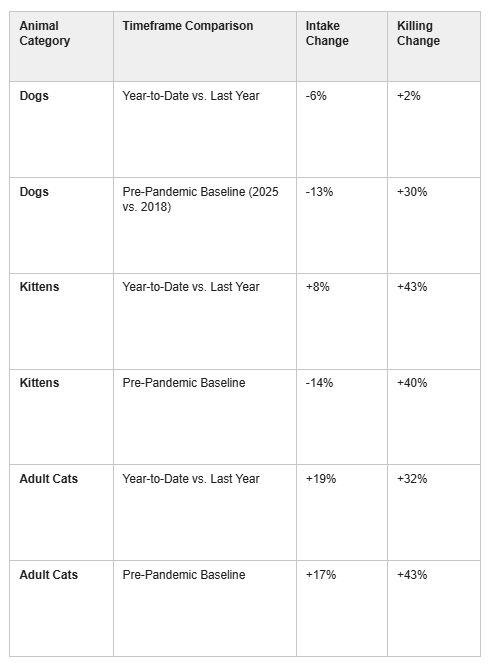
If fewer animals coming in doesn’t mean fewer animals killed, and modest increases in intakes produce massive increases in killing, then “too many animals” simply doesn’t explain what is happening. At a mismanaged facility like LAAS, killing is not simply a function of how many animals arrive at the door. The data point to a deeper failure in how the shelter operates — and that is the story that needed to be investigated.
Sterilization can save lives, but it cannot be used as an excuse to ignore what is happening inside pounds today. Animals are being killed at alarming and disproportionate rates, and the public deserves the truth. Because when we are no longer dealing with the truth, we lose the ability to identify real problems and propose solutions anchored in reality.
So, why does killing go up even when intakes go down? And why does killing skyrocket disproportionately when there are only modest increases in intakes?
Fewer adoption hours compared to years past.
Neglectful staff, and managers who turn a blind eye.
Elected officials and pound managers indifferent to what constituents want and animals need.
Reporters who do not challenge official narratives.
Residents, taxpayers, and voters need to take the power back.