

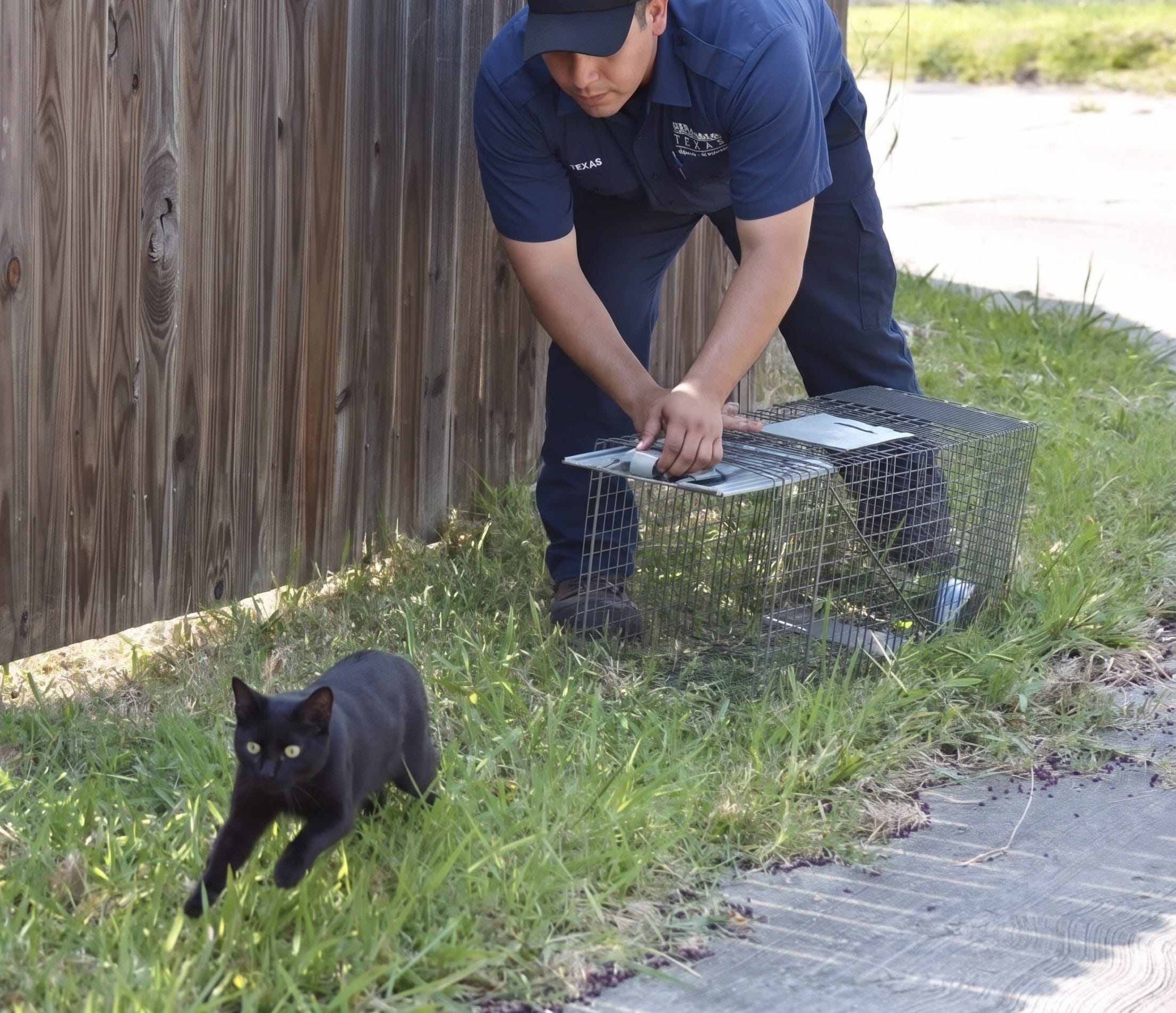
While “native species” advocates throughout the world continue their campaign to eradicate millions of cats, a recent study exonerated cats for the wildlife harm they were being falsely blamed for.
Researchers analyzed 11 years of wildlife rehabilitation records in Australia, covering 52,475 individual animals from 158 threatened species. Human and human activities were responsible for most known wildlife harm, followed by extreme weather events (which might also be human-related). Notably, other animals represented just 4.4% of all wildlife injuries, with cats representing a minority of those (0.6%). That is 315 of the 52,475 injuries, and does not account for the fact that cats are scavengers and may have come across wild animals already injured for other reasons (e.g., human caused harm).
It is not the only study to come to that conclusion.
A more recent study examined hunting behavior among thousands of owned and semi-owned cats in Australia. The researchers were interested in testing whether widely cited estimates of Australian pet cats killing “61–118 million birds annually” were accurate. They were not.
Researchers found that roughly 8 out of 10 cats — 77% — didn’t hunt, while only 23% hunted sometimes or often, and focused mostly on insects. Birds were the least commonly reported prey, resulting in a figure hundreds of times lower than reported by cat-killing advocates.
Tragically, it isn’t just Australian nativists targeting cats. Nativists in the United States are killing cats, too, such as on Hawaii, even though American studies have reached similar conclusions.
For example, a study in Washington, D.C., found that wildlife is concentrated in forested areas, but cats avoid these. By contrast, cats are concentrated in more urban areas, devoid of so-called “native” wildlife. Specifically,
Cats, unsurprisingly, were most associated with human population density — more humans, more cats. On the other hand, cats had a negative association with tree canopy cover and water.
Wild animals were just the opposite: they were more associated with areas of high tree canopy cover and with access to water, and were less likely to live in more areas with higher densities of humans.
In addition to occupying different areas, there is a large percentage of indoor-only U.S. cats (roughly 60%), and cats who do go outside rarely venture very far: approximately 150 feet, the equivalent of one to three houses on their block. Finally, neutering and feeding reduce home ranges by 79% and activity by 30%. This further reduces chance encounters with wildlife, and thus hunting.
These studies and many others demonstrate that while public debate has disproportionately emphasized cats as a “conservation threat,” that debate is misinformed. In addition to falsely blaming cats, it overlooks more common and preventable human causes of wildlife injury, including hazardous infrastructure, roads, entangling materials, and habitat fragmentation.
Thankfully, there is a growing scientific consensus across the globe that cats are not to blame for species decline and that the call to eliminate them is “wrong and fuels an unwarranted moral panic over cats.” In fact, that consensus is increasingly rejecting the claim that we should “judge species on their origins,” calling “the practical value of the native-versus-alien species dichotomy” unworkable and counterproductive.
Today’s management approaches must recognize that the natural systems of the past are changing forever thanks to drivers such as climate change, nitrogen eutrophication, increased urbanization and other land-use changes. It is time for scientists, land managers and policy-makers to ditch this preoccupation with the native–alien dichotomy and embrace more dynamic and pragmatic approaches to the conservation and management of species — approaches better suited to our fast-changing planet.
Specifically, they state that “free-ranging cats should be accepted as legitimate members of their ecosystems.” They also state that the scientific evidence is clear that removing one species to help another does not work: it is a slaughter with no end and no real benefit.
Please help us to educate policymakers and urge them to adopt win-win solutions like community cat sterilization.

For a copy of our model ordinance and guide, click here.
For our step-by-step guide to getting it introduced, click here.